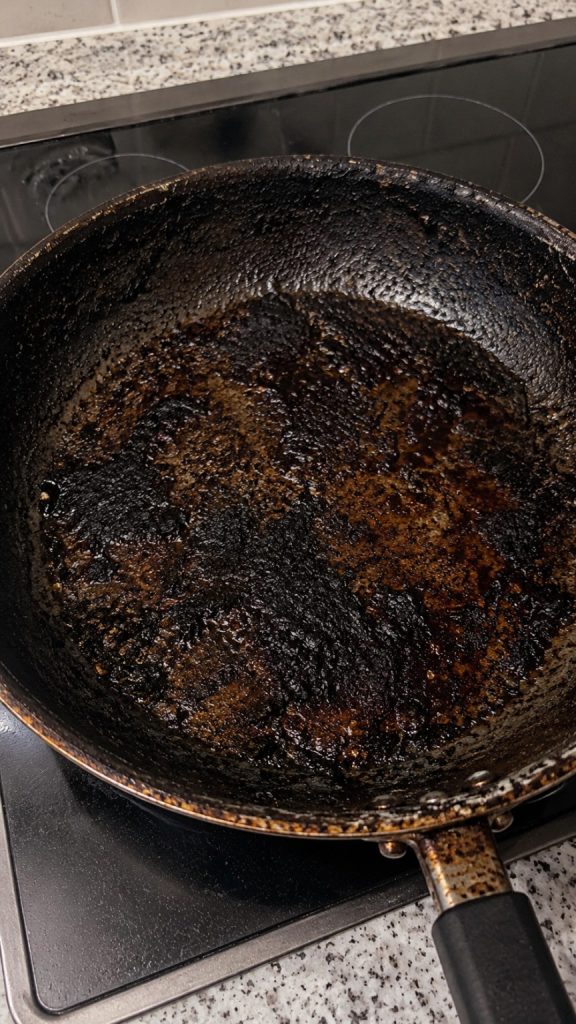
A badly burnt frying pan can look impossible to save. Thick black residue, baked-on grease, and brown scorched stains can build up over time, especially when food is left too long on the heat or when grease burns into the surface again and again. The good news is that many heavily stained pans can still be improved with a simple cleaning method using baking soda, vinegar, and dish soap.
This method is popular because it uses affordable household ingredients and creates a foamy cleaning reaction that helps loosen stuck-on grease and burnt buildup. In the image and video, the frying pan is covered with a dark layer of burnt residue, making it a perfect example of the kind of mess this natural cleaning method is designed to tackle.
If you are dealing with a pan that looks badly scorched and greasy, this guide will walk you through the process step by step.
Why Burnt Frying Pans Get So Dirty
Frying pans collect layers of oil, grease, food particles, and heat damage over time. When food burns or oil smokes repeatedly, a hard dark layer starts forming on the pan surface. This buildup becomes tougher each time the pan is used again without a deep clean.
Some of the most common reasons a frying pan becomes heavily burnt include:
- Cooking on very high heat too often
- Leaving food or oil in the pan too long
- Not cleaning grease fully after each use
- Reheating burnt residue again and again
- Using the same pan for frequent frying or sautéing without deep maintenance
Once this buildup hardens, regular soap and water often are not enough. That is why many people turn to a stronger but still simple homemade cleaning method.
Why This Natural Cleaning Method Works
The cleaning method shown in the video uses three basic ingredients:
- Baking soda
- White vinegar
- Dish soap
Each ingredient helps in a different way:
Baking Soda
Baking soda is mildly abrasive, which makes it useful for lifting burnt grime without being excessively harsh. It also helps absorb bad smells.
White Vinegar
Vinegar reacts with baking soda and helps loosen stuck-on dirt and greasy buildup. The fizzing action helps break through grime.
Dish Soap
Dish soap is very helpful for cutting through grease and oily residue. It also helps the mixture spread more easily across the burnt surface.
Together, these ingredients form a foamy cleaner that can help soften and loosen tough burnt deposits.
What You Need
Before starting, gather these materials:
| Item | Purpose |
|---|---|
| Baking soda | Helps lift burnt residue |
| White vinegar | Helps loosen grime and create fizz |
| Dish soap | Cuts through grease |
| Sponge | For scrubbing the pan |
| Scrub brush | Helpful for stubborn burnt spots |
| Warm water | For rinsing and wiping |
| Gloves | Helps protect your hands |
| Soft cloth or paper towels | For final wiping and drying |
What the Pan Looks Like Before Cleaning
In the image, the frying pan is severely burnt and covered with a thick layer of blackened residue. The cooking surface has:
- Dark black crusted buildup
- Brown scorched stains
- Burnt grease stuck to the bottom
- Greasy residue around the inner edges
- A worn, dirty appearance that makes the pan look unusable
This is exactly the kind of pan that often needs more than a quick rinse. A deeper cleaning method is needed to loosen what has baked onto the surface.
Step 1: Make Sure the Pan Is Cool
Before cleaning, make sure the frying pan is fully cool. Never add vinegar or start scrubbing a hot pan straight from the stove. Cleaning is safer and easier when the pan has returned to room temperature.
If the pan was recently used, set it aside and allow it to cool completely.
Step 2: Add Baking Soda
The first ingredient to go into the pan is baking soda. Sprinkle a generous amount directly onto the burnt surface. Focus on the darkest and most heavily scorched areas.
You want enough baking soda to cover most of the burnt residue, especially the center of the pan where the buildup is usually worst.
Why this matters
Baking soda helps form the cleaning base and gives the scrubbing process more power.
Step 3: Add Dish Soap
Next, add a small amount of dish soap over the baking soda. You do not need too much. A few drops or a light squeeze is often enough.
Dish soap helps cut through greasy residue and gives the mixture extra cleaning strength.
Best tip
If the pan is especially greasy, dish soap becomes even more important because it helps break down the oily layer stuck under the burnt residue.
Step 4: Pour in White Vinegar
Now slowly pour white vinegar into the pan. As soon as it touches the baking soda, it will start to fizz and bubble. This reaction is one of the most satisfying parts of the method and helps loosen buildup on the pan surface.
Do not overfill the pan. You only need enough vinegar to activate the baking soda and create a foamy mixture across the dirty surface.
What the fizzing does
The bubbling reaction helps reach into the burnt patches and soften the hardened grime.
Step 5: Let the Mixture Sit
After adding baking soda, dish soap, and vinegar, let the mixture sit for a little while. This gives the ingredients time to work into the burnt residue.
For light to moderate buildup, a short waiting time may help. For very heavy blackened areas like the one shown in the image, letting the mixture sit a bit longer can improve results.
Why this step is important
Trying to scrub immediately may make the job harder. Letting the cleaner sit gives the buildup time to soften.
Step 6: Scrub the Burnt Surface
Once the mixture has had time to work, begin scrubbing with a sponge or scrub brush. Use firm circular motions, especially over the darkest areas.
As you scrub, you should start to notice:
- Black residue loosening
- Brown grease lifting
- Burnt flakes breaking apart
- The pan surface slowly becoming more visible
This is where patience matters. Heavily burnt pans often do not become perfect in a few seconds, but visible progress usually appears as you continue.
Best scrubbing approach
Start in one section and work your way across the pan rather than scrubbing randomly. This helps you see progress more clearly.
Step 7: Wipe and Rinse
After scrubbing, wipe away the loosened grime with a damp cloth, sponge, or paper towel. Then rinse the pan with warm water.
If the pan still has stubborn dark patches, repeat the process with another round of baking soda, dish soap, and vinegar.
It is common for badly burnt pans to need more than one cleaning cycle.
What Kind of Results to Expect
A pan this burnt may not return to a like-new factory appearance in one session, but this method can greatly improve it. After cleaning, the pan may look:
- Less blackened
- Less greasy
- Cleaner and fresher
- More usable
- More hygienic for future cooking
The goal is steady improvement and the removal of as much stuck-on residue as possible.
Best Time to Use This Method
This cleaning method works best when:
- The pan has cooled completely
- You have enough time to let the mixture sit
- You are cleaning deep burnt residue
- Normal soap and water are no longer enough
It is a great option when a pan has heavy buildup but you still want to try saving it before throwing it away.
Common Mistakes to Avoid
There are a few mistakes that can make cleaning less effective.
1. Cleaning the Pan While It Is Hot
A hot pan can make the reaction harder to control and may be unsafe to handle.
2. Using Too Little Baking Soda
A light dusting may not be enough for a thick burnt layer. Heavier buildup needs more coverage.
3. Not Letting the Mixture Sit
The ingredients need a little time to loosen the residue. Scrubbing too early makes the job harder.
4. Giving Up Too Fast
Severely burnt pans often need repeated scrubbing or a second application.
5. Scrubbing Too Aggressively on Delicate Surfaces
If the pan has a delicate coating, be careful not to damage it with very harsh tools.
Extra Tips for Better Results
Here are a few simple ways to improve the cleaning process:
- Use warm water when rinsing
- Repeat the process on the darkest spots
- Use a scrub brush for thick buildup
- Wipe away loosened grime as you go
- Dry the pan fully after cleaning
If the residue is extremely stubborn, a second round often makes a big difference.
Can This Method Help With Greasy Smell Too?
Yes. Burnt residue and old grease often leave a bad smell in cookware. Baking soda is widely used to help with odor, and removing the burnt layer can greatly improve how the pan smells.
Once the pan is cleaner, it should also feel fresher and less oily.
Is This Method Safe for All Pans?
That depends on the type of pan. For many regular frying pans, this method can be useful. However, if the pan has a special nonstick coating that is already badly damaged, you should clean gently and avoid overly aggressive scraping.
If a pan is too worn, peeling, or damaged, it may be better to replace it rather than continue using it.
How to Keep a Frying Pan From Getting This Burnt Again
Once the pan is cleaner, a few habits can help prevent heavy buildup in the future:
- Wash the pan soon after cooking
- Do not leave burnt grease sitting in it
- Avoid overheating oil repeatedly
- Use moderate heat when possible
- Wipe out grease before it turns into a hard crust
- Deep clean the pan occasionally before buildup becomes severe
A little maintenance can prevent a pan from reaching this level of damage again.
Frequently Asked Questions
Can baking soda really help clean a burnt pan?
Yes. Baking soda is often used in natural cleaning methods because it helps lift grime and works well with scrubbing.
Why add vinegar?
Vinegar creates a fizzing reaction with baking soda and helps loosen the burnt buildup.
What does dish soap do?
Dish soap helps cut through grease and makes the cleaning mixture more effective.
Will one cleaning be enough?
Sometimes yes, but very heavily burnt pans often need more than one round.
Can I use this on old burnt grease?
Yes, especially if you let the mixture sit before scrubbing.
Does the pan have to be cool first?
Yes. Always clean the pan after it has cooled.
Final Thoughts
A heavily burnt frying pan may look ruined, but in many cases it can still be improved with a simple homemade cleaning method. The combination of baking soda, vinegar, and dish soap is a practical way to loosen black burnt residue, reduce greasy buildup, and make scrubbing easier.
The image and video show exactly the kind of pan many people struggle with: dark, crusted, greasy, and difficult to clean. That is why this method is so appealing. It is simple, affordable, and easy to try with ingredients already found in many kitchens.
If your frying pan looks similar, start with baking soda, add a little dish soap, pour in vinegar, let it fizz, and scrub patiently. You may be surprised by how much burnt buildup you can remove with a little time and effort.