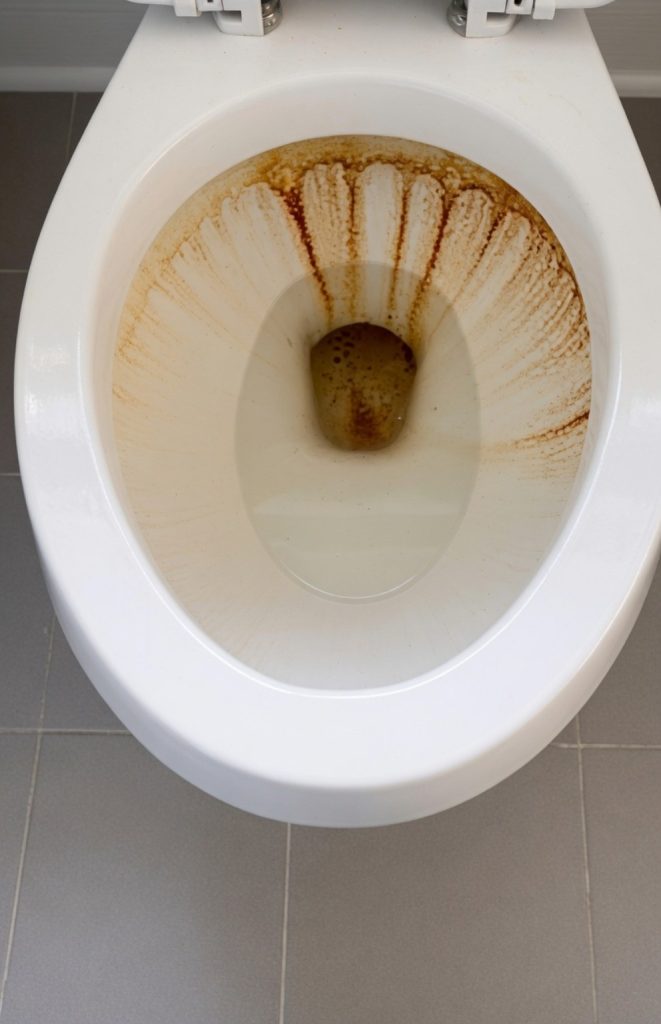
Brown stains inside a toilet bowl can make the bathroom look dirty even when the rest of the room is clean. These stains often appear as vertical streaks under the rim, dark marks near the water line, or rusty-looking patches deep inside the bowl. They can come from hard water minerals, rust, old buildup, and residue that slowly collects over time.
The toilet shown here has visible brown streaks around the inside of the bowl, especially under the rim and toward the drain area. In the cleaning video, a gloved hand pours a bright blue cleaning liquid into the bowl, lets it coat the stained surface, and then scrubs the inside with a toilet brush until the porcelain looks fresh and bright again.
This method is simple, visual, and satisfying because the blue cleaner makes it easy to see where the product has spread before scrubbing.
Why Toilet Bowls Get Brown Stains
Brown toilet stains are very common, especially in bathrooms with hard water. Even if the toilet is flushed regularly, minerals can stick to the porcelain and leave behind yellow, orange, or brown marks.
Common causes include:
- Hard water minerals
- Rust from iron in the water
- Limescale buildup
- Old urine scale around the water line
- Infrequent deep cleaning
- Stains collecting under the rim
- Dirt settling in the lower bowl area
When these stains are left for too long, they become harder to remove with a quick brush. A stronger cleaning step is needed.
What Is Shown in the Cleaning Video
The video starts with a close view of a white toilet bowl covered in brown streaks. The stains run from under the rim down toward the water line, creating a heavy dirty appearance.
A hand wearing gloves pours a bright blue toilet cleaning liquid into the bowl. The cleaner spreads across the surface and flows down over the stained areas. After that, a toilet brush scrubs the inside of the bowl, focusing on the stained sides, the water line, and the lower drain area.
At the end, the bowl looks much cleaner, brighter, and fresher.
Best Cleaner for This Method
For this type of stain, a blue toilet bowl cleaning liquid is a practical choice because it clings to the bowl and makes the treated areas easy to see.
You can use:
| Cleaning Item | Purpose |
|---|---|
| Blue toilet bowl cleaner | Helps coat stains and loosen buildup |
| Rubber gloves | Protects hands during cleaning |
| Toilet brush | Scrubs stains from the bowl |
| Small cup | Helps pour cleaner evenly if needed |
| Clean water flush | Rinses away loosened residue |
| Paper towel or cloth | Wipes the outer rim if needed |
Important Safety Note
Never mix toilet cleaners with bleach, vinegar, ammonia, or other cleaning products. Mixing bathroom chemicals can create dangerous fumes. Use one cleaner at a time, follow the product label, and keep the bathroom ventilated.
Always wear gloves, especially when dealing with toilet stains and strong cleaners.
Step 1: Put on Gloves
Before touching the toilet or handling any cleaning product, wear rubber gloves. Gloves protect your hands and make the cleaning process more comfortable.
In the video, the hand is gloved before pouring the blue liquid, which is the right way to start.
Step 2: Pour the Blue Cleaner Around the Bowl
Pour the blue cleaning liquid slowly around the inside rim of the toilet bowl. Let it run down the stained sides naturally.
Focus on the areas with the most brown streaks:
- Under the rim
- Around the water line
- Down the sides of the bowl
- Around the lower drain area
- Any dark mineral marks
The goal is to coat the stains instead of only pouring cleaner into the water.
Step 3: Let the Cleaner Sit
After pouring the cleaner, let it sit for a few minutes. This gives the liquid time to loosen the mineral stains and soften the buildup before scrubbing.
For light stains, a short wait may be enough. For heavier brown marks, leave the cleaner on the surface a little longer, following the product instructions.
Step 4: Scrub with a Toilet Brush
Use a toilet brush to scrub the entire inside of the bowl. Start under the rim, then work down the sides, then scrub around the water line and the lower drain area.
Use firm circular movements, but avoid splashing. The brush should move the cleaner across the stained areas while loosening the brown residue.
Spend extra time on:
- Vertical brown streaks
- Rust-colored stains
- Dark marks inside the drain area
- The ring around the water line
Step 5: Flush and Check the Result
After scrubbing, flush the toilet to rinse away the cleaner and loosened buildup.
Check the bowl after flushing. If some stains remain, repeat the process on the stubborn areas. Heavy mineral stains often need more than one round.
Step 6: Repeat for Stubborn Brown Marks
Some toilet stains are old and deeply attached to the porcelain. If the stain does not disappear after the first cleaning, apply the cleaner again and let it sit a bit longer before scrubbing.
Repeating the method is usually better than scrubbing too aggressively.
Why the Blue Liquid Works Well
Blue toilet cleaner works well for this type of video and cleaning method because it spreads visibly across the bowl. You can clearly see where it has touched the surface, which helps make sure the stained areas are covered.
It also creates a strong visual transformation: dirty brown stains first, blue cleaner coating the bowl, scrubbing action, then a clean white finish.
Best Areas to Clean First
When cleaning a stained toilet bowl, start with the dirtiest areas first.
| Area | Why It Matters |
|---|---|
| Under the rim | Stains often begin here and drip downward |
| Water line | Mineral buildup collects here |
| Lower drain area | Dark stains often sit here |
| Side walls | Brown streaks are most visible here |
| Front inside curve | Often missed during quick cleaning |
Common Mistakes to Avoid
Mixing Different Cleaners
Do not mix toilet cleaner with bleach, vinegar, ammonia, or other products. Use only one cleaner at a time.
Not Letting the Cleaner Sit
If you scrub immediately, the cleaner may not have enough time to loosen the stains.
Scrubbing Only the Water Area
Many stains start under the rim, so make sure the cleaner reaches the upper bowl.
Using Too Much Cleaner
More cleaner does not always mean better results. Use enough to coat the stained areas, but follow the label.
Ignoring Ventilation
Bathroom cleaners can have a strong smell. Keep the door open or turn on ventilation while cleaning.
How to Keep the Toilet Cleaner Longer
After deep cleaning, a few simple habits can help prevent brown stains from coming back quickly:
- Brush the toilet regularly
- Clean under the rim weekly
- Flush fully after use
- Avoid letting stains sit too long
- Deep clean the bowl before stains become dark
- Pay attention to hard water buildup
If your home has hard water, stains may return faster. Regular light cleaning helps reduce heavy buildup.
Can This Remove Rust-Like Stains?
It can help reduce rust-like stains, especially if they are surface-level. However, deep mineral stains may need repeated cleaning or a cleaner specifically designed for rust and limescale.
If the stains are caused by hard water, they may return unless the water issue is managed.
Can You Use a Homemade Cleaner Instead?
For light toilet stains, some people use baking soda as a gentle scrub. However, for heavy brown stains like the ones shown in the image, a proper toilet bowl cleaner usually gives a stronger result.
The blue liquid method is better for a visual deep-cleaning video because the cleaner spreads clearly and makes the transformation more satisfying.
Simple Cleaning Routine
For a cleaner toilet bowl, use this routine:
- Add toilet bowl cleaner under the rim.
- Let it sit for a few minutes.
- Scrub under the rim and around the water line.
- Scrub the lower drain area.
- Flush and check the result.
- Repeat only if needed.
This keeps the bowl brighter and reduces the chance of heavy brown stains coming back.
Frequently Asked Questions
What causes brown stains inside a toilet bowl?
Brown stains are often caused by hard water minerals, rust, limescale, and old buildup that collects under the rim and around the water line.
Does blue toilet cleaner remove brown stains?
It can help loosen and remove many common toilet bowl stains, especially when it is allowed to sit before scrubbing.
How long should toilet cleaner sit before scrubbing?
A few minutes is usually enough for routine stains. For heavier buildup, follow the cleaner’s label and allow more contact time if permitted.
Should I scrub under the rim?
Yes. Many brown streaks begin under the rim and run down the bowl, so that area should be cleaned carefully.
Can I mix blue toilet cleaner with bleach?
No. Never mix toilet cleaner with bleach or other cleaners. Mixing chemicals can create dangerous fumes.
What if the stain does not come off?
Repeat the process or use a cleaner made for hard water, rust, or limescale stains. Very old stains may need more than one cleaning session.
Final Thoughts
Brown toilet bowl stains can look unpleasant, but they can often be improved with a simple cleaning method. A blue toilet bowl cleaner, gloves, and a toilet brush are enough to create a clear before-and-after transformation.
Pour the cleaner around the rim, let it flow over the stained areas, allow it to sit briefly, then scrub the sides, water line, and lower bowl. After flushing, the toilet should look brighter, fresher, and much cleaner.
For best results, clean regularly before stains become heavy. A few minutes of maintenance can prevent the bowl from reaching the dark stained condition shown at the beginning.