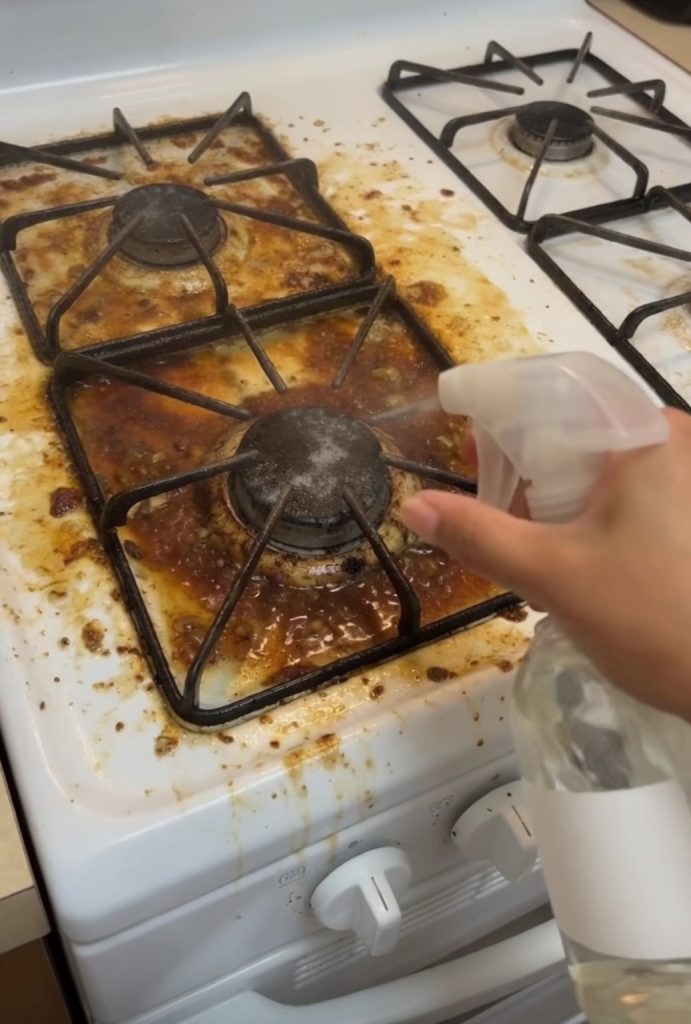
A dirty gas stove can make the whole kitchen look messy, even when everything else is clean. Grease splatters, cooked-on sauce, burnt food drops, and brown sticky stains can build up around the burners very quickly. Once that mess dries and heats again, it becomes harder to remove with normal wiping.
The stove shown here is a perfect example of heavy kitchen buildup. The white surface is covered with yellow-brown grease, dark spots, sticky stains, and splashes around the front burners. In the cleaning video, a simple spray cleaner is applied directly to the dirty surface, then the grime is scrubbed with a sponge until the white stove starts looking fresh again.
This guide explains how to clean a greasy gas stove using a simple homemade degreasing method with dish soap, warm water, white vinegar, and baking soda for tougher stains.
Why Gas Stoves Get Dirty So Fast
Gas stoves are used almost every day in many kitchens. When food boils over, oil splashes, or sauce spills, the heat from the burner can bake the mess onto the surface. If it is not wiped right away, it becomes sticky and dark.
Common causes of stove buildup include:
- Oil splatter from frying
- Sauce spilling around the burner
- Food boiling over
- Burnt crumbs under the grates
- Grease collecting around burner caps
- Wiping the stove without fully removing oily residue
Over time, these stains turn into a brown greasy layer that looks difficult to clean.
What Is Shown in the Cleaning Video
The video shows a white gas stove with heavy stains around the burners. A hand uses a spray bottle to apply cleaner directly over the greasy area. The liquid spreads across the stains, helping soften the residue.
After spraying, a yellow sponge is used to scrub the surface in circular motions. The brown grease starts loosening, and the white stove surface becomes more visible. At the end, the stove looks much cleaner and fresher.
This is a simple but satisfying cleaning method because the before-and-after result is very clear.
Best Homemade Cleaner for This Stove
For this kind of greasy mess, you can use a simple spray mixture.
Homemade Degreasing Spray
| Ingredient | Amount | Purpose |
|---|---|---|
| Warm water | 1 cup | Helps loosen sticky residue |
| Dish soap | 1 teaspoon | Cuts through grease |
| White vinegar | 2 tablespoons | Helps break down grime and odor |
| Baking soda | Optional sprinkle | Helps scrub stubborn burnt spots |
Mix the warm water, dish soap, and vinegar in a spray bottle. Shake gently before using.
For very stubborn spots, sprinkle baking soda directly on the stain after spraying, then scrub with a sponge.
What You Need
- Spray bottle
- Warm water
- Dish soap
- White vinegar
- Baking soda
- Sponge
- Microfiber cloth
- Old toothbrush or small brush
- Gloves
- Dry towel
Step 1: Turn Off the Stove and Let It Cool
Before cleaning, make sure all burners are off and the stove is completely cool. Never clean around hot burners.
If the stove was recently used, wait until the grates and burner caps are cool enough to touch safely.
Step 2: Remove Loose Crumbs and Food Pieces
Use a dry paper towel or cloth to remove loose crumbs, burnt food pieces, and dry debris. This makes the wet cleaning step easier.
Do not push crumbs into the burner holes. Wipe carefully around the burner area.
Step 3: Spray the Degreasing Cleaner
Spray the homemade cleaner over the greasy stove surface, especially around the front burner where the stains are darkest.
Focus on:
- Brown grease patches
- Burnt sauce stains
- Sticky oil areas
- Corners around the burner grates
- Drips near the front knobs
Let the spray sit for 3 to 5 minutes. This gives the cleaner time to soften the grease.
Step 4: Scrub with a Sponge
Use a sponge to scrub the dirty surface in circular motions. This helps lift the brown grease and loosen burnt residue.
For the best result, work in small sections. Scrub one stained area, wipe it, then move to the next area.
If the stain is very sticky, spray again and let it sit a little longer before scrubbing.
Step 5: Use Baking Soda on Stubborn Spots
For dark cooked-on stains, sprinkle a small amount of baking soda directly on the area. Spray a little cleaner over it, then scrub gently.
Baking soda gives the sponge more cleaning power without needing harsh scraping.
Do not use metal tools or sharp blades on the stove surface because they can scratch the finish.
Step 6: Clean Around the Burner Caps
Grease often collects around the burner caps and grates. If possible, remove the grates and burner caps before deep cleaning.
Wipe around the burner base carefully. Avoid flooding the burner holes with liquid. A damp sponge or cloth is better than pouring water.
If grease is stuck in small corners, use an old toothbrush.
Step 7: Wipe with a Damp Cloth
After scrubbing, use a clean damp microfiber cloth to remove the loosened grease and cleaning residue.
Rinse the cloth often so you are not spreading dirty water back onto the stove.
Keep wiping until the surface feels smooth and not sticky.
Step 8: Dry the Stove Completely
Use a dry towel to wipe the stove surface, burner caps, and grates. This step is important because moisture around the burners can affect ignition.
Make sure everything is dry before turning the gas stove back on.
Before and After Result
Before cleaning, the stove looks greasy, stained, and neglected. The white surface is covered with brown oil marks, sticky food spills, and dark cooked-on residue.
After cleaning, the stove should look brighter, smoother, and much fresher. The white surface becomes visible again, and the kitchen immediately looks cleaner.
For very old stains, one cleaning session may not remove everything. Repeating the same method can improve the result.
Safety Tips for Cleaning a Gas Stove
- Always turn off the stove first
- Let the burners cool completely
- Do not spray cleaner directly into burner holes
- Do not flood the stove with water
- Dry all parts before using the stove again
- Avoid harsh metal scrubbers on enamel surfaces
- Keep cleaning products away from open flame
These simple safety steps help protect the stove and make cleaning easier.
How Often Should You Clean a Gas Stove?
For best results, wipe the stove after cooking greasy meals. A quick wipe after frying can prevent heavy buildup.
A deeper clean can be done once a week or whenever stains start becoming sticky and dark.
If you cook every day, a simple daily wipe can save you from heavy scrubbing later.
Common Mistakes to Avoid
Spraying Too Much Liquid
Too much liquid can run into burner areas. Use enough cleaner to wet the stains, but do not soak the stove.
Scrubbing Too Hard
Let the cleaner sit first. This softens the grease and reduces the need for aggressive scrubbing.
Forgetting the Grates
Gas stove grates collect grease too. Remove and clean them separately when needed.
Leaving the Stove Wet
Always dry the stove before using it again.
Waiting Too Long
The longer grease stays on the stove, the harder it becomes to remove.
Extra Tip for Very Greasy Stove Grates
If the grates are greasy, place them in a sink with warm water and dish soap. Let them soak for 20 to 30 minutes, then scrub with a brush and rinse well.
Dry them completely before putting them back.
Frequently Asked Questions
Can I clean a gas stove with vinegar?
Yes, vinegar can help with greasy residue and odor, especially when mixed with warm water and dish soap.
Is baking soda good for stove stains?
Yes. Baking soda is helpful for stubborn cooked-on stains because it adds gentle scrubbing power.
Can I spray cleaner around gas burners?
You can spray lightly around the surface, but avoid spraying directly into burner holes. Use a damp cloth for careful cleaning near the burners.
What removes brown grease from a white stove?
Warm water, dish soap, vinegar, and baking soda can help loosen brown grease and make it easier to wipe away.
Should I remove the burner grates before cleaning?
Yes, if possible. Removing the grates makes it easier to clean the stove surface properly.
How do I prevent this mess next time?
Wipe spills after cooking, clean grease before it dries, and deep clean the stove regularly.
Final Thoughts
A dirty gas stove can look difficult to clean, but a simple homemade degreasing spray can make the job much easier. Warm water, dish soap, white vinegar, and baking soda work together to loosen grease, soften burnt residue, and help restore the stove surface.
The method is simple: spray the cleaner, let it sit, scrub with a sponge, wipe with a damp cloth, and dry everything well. For stubborn stains, add baking soda and repeat the process.
With regular cleaning, even a greasy white gas stove can look fresh, bright, and ready for the next meal.