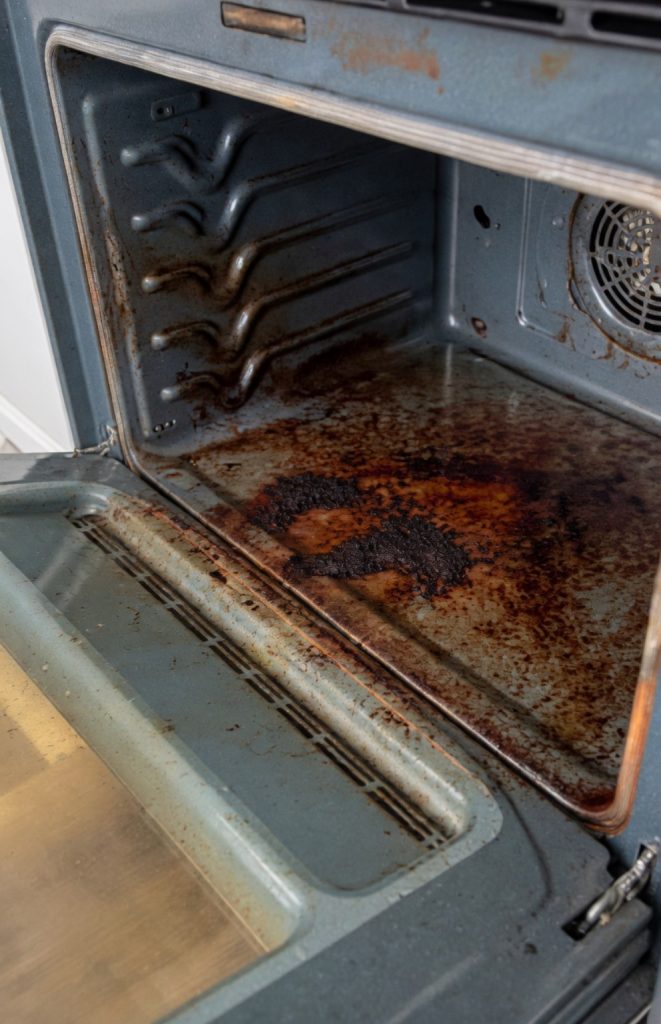
A dirty oven can quickly make the whole kitchen feel unpleasant. Burnt grease, black residue, and stubborn baked-on stains build up over time, especially if the oven is used often. The good news is that you do not always need expensive chemical cleaners to make it look fresh again. A simple mixture made with baking soda, vinegar, and a little dish soap can help loosen grime and make deep cleaning much easier.
This natural oven cleaning method is popular because it uses affordable ingredients that many people already have at home. It can help soften burnt grease, reduce odor, and leave the oven looking much cleaner with a bit of scrubbing. If your oven has heavy dark stains and greasy buildup like the one shown in the image, this method is a practical place to start.
Why Ovens Get So Dirty
Ovens collect grease, food splatters, melted cheese, sauces, oils, and crumbs. When these stay inside during repeated cooking sessions, they bake onto the metal surface and become harder to remove. Over time, the bottom of the oven may develop dark burnt spots, sticky residue, and a strong unpleasant smell.
This buildup is not just a cosmetic issue. A greasy oven may produce smoke, create bad odors, and make routine cooking less enjoyable. That is why many homeowners look for a simple oven cleaning method they can use at home without spending too much money.
The Natural Oven Cleaning Method
The cleaning method shown in the video uses three simple ingredients:
- Baking soda
- White vinegar
- Dish soap
These ingredients work together to create a foamy cleaning paste. Baking soda helps lift grime and odors. Vinegar reacts with the baking soda and helps loosen buildup. Dish soap helps cut through grease and makes scrubbing more effective.
What You Need
Before you start, gather the following supplies:
| Item | Purpose |
|---|---|
| Baking soda | Helps lift burnt grime and absorb odors |
| White vinegar | Helps loosen grease and react with baking soda |
| Dish soap | Cuts through greasy residue |
| Small bowl | For mixing the cleaner |
| Sponge or scrub pad | For scrubbing the oven surface |
| Microfiber cloth or damp cloth | For wiping away residue |
| Gloves | To keep your hands protected |
How to Make the Cleaning Paste
Making the mixture is simple and only takes a minute.
Ingredients:
- 3 to 4 tablespoons baking soda
- A small amount of white vinegar
- A few drops of dish soap
Method:
- Add the baking soda to a bowl.
- Slowly pour in white vinegar.
- Let the mixture fizz and bubble.
- Add a few drops of dish soap.
- Mix until it forms a thick paste.
The paste should not be too runny. You want it thick enough to stay on greasy oven surfaces.
How to Clean the Oven Step by Step
1. Make Sure the Oven Is Cool
Never clean a hot oven. Turn it off and let it cool completely before you begin.
2. Remove Loose Crumbs
Use a dry paper towel or cloth to remove loose food particles and crumbs from the bottom.
3. Apply the Paste
Spread the baking soda mixture over the dirtiest parts of the oven, especially:
- The bottom panel
- Side walls
- Corners
- Burnt spots
- Greasy areas near the edges
Focus extra paste on the darkest stains.
4. Let It Sit
Leave the paste on the surface for a while so it can loosen the buildup. For lighter dirt, 15 to 20 minutes may help. For heavier grime, you can leave it longer.
5. Scrub Gently
Use a sponge or scrub pad to work the paste into the dirty areas. Scrub in circular motions. As you scrub, you should notice grease and dark residue starting to lift.
6. Wipe Clean
Use a damp microfiber cloth to wipe away the paste and loosened grime. Rinse the cloth as needed and keep wiping until the surface looks cleaner.
7. Repeat if Needed
For ovens with heavy burnt buildup, one round may not be enough. Reapply the paste to the darkest spots and scrub again.
What Makes This Method Effective
Many people like this cleaning method because it is:
- Affordable
- Easy to prepare
- Simple to use
- Good for routine deep cleaning
- Helpful for reducing grease and odor
Baking soda is especially useful because it has a mild abrasive quality. It can help scrub away residue without being too harsh. Dish soap helps break down greasy deposits, while vinegar helps soften stuck-on dirt.
Best Areas to Target First
If your oven looks similar to the one in the image, start with the dirtiest sections first:
- The center of the oven floor
- Dark burnt patches
- Greasy corners
- Side walls with brown residue
- Around the oven fan area if accessible and safe to wipe
Working section by section often gives the best results.
Tips for Better Oven Cleaning Results
Use Gloves
Even natural cleaning can be messy. Gloves help protect your hands from grease and residue.
Do Not Make the Paste Too Thin
If the mixture becomes watery, it may slide off the oven surface. A thicker paste sticks better.
Wipe in Stages
Instead of trying to clean everything at once, wipe small areas gradually.
Repeat on Stubborn Spots
Very old burnt stains often need a second or third pass.
Clean Regularly
Routine light cleaning prevents future buildup from becoming too hard to remove.
Common Mistakes to Avoid
A few mistakes can make oven cleaning harder:
Cleaning While the Oven Is Hot
This is unsafe and can make the cleaning product dry too fast.
Using Too Much Liquid
A watery mixture may not cling well to vertical surfaces.
Scrubbing Too Aggressively
Very harsh scrubbing can damage some oven finishes. Use steady pressure, not excessive force.
Ignoring the Residue
Always wipe away all remaining cleaner after scrubbing so the oven is ready for future use.
How Often Should You Clean Your Oven?
That depends on how often you cook. A busy kitchen may need a deeper oven clean more often, while occasional use may only require periodic maintenance.
A quick wipe after messy meals can help reduce heavy buildup. The longer grease and spills stay in the oven, the harder they become to remove.
Can This Help With Oven Odor?
Yes, it can help. Burnt grease and food residue often cause bad smells inside the oven. Cleaning away that buildup may reduce odor significantly. Baking soda is also widely known for helping absorb unwanted smells.
Is This Good for Very Dirty Ovens?
Yes, but heavily neglected ovens may need repeated cleaning sessions. If the oven has thick layers of black carbon and burnt grease, patience is important. One cleaning session may improve it a lot, but the best results sometimes come after repeating the process.
Signs the Oven Is Getting Cleaner
As you clean, you may notice:
- Black residue wiping away
- Brown grease fading
- Metal surfaces becoming more visible
- Less sticky texture
- Reduced burnt smell
These are good signs that the paste is doing its job.
Simple Oven Cleaning Routine for Maintenance
After doing a deep clean, you can keep the oven in better condition with a simple routine:
- Wipe spills after cooking once the oven cools.
- Remove crumbs regularly.
- Clean visible grease before it hardens.
- Do a deeper scrub when buildup starts to appear.
This helps keep the oven cleaner for longer and reduces the amount of hard scrubbing needed later.
Frequently Asked Questions
Can I use this method for baked-on grease?
Yes, it can help loosen baked-on grease, especially when you let the paste sit before scrubbing.
Do I need expensive oven cleaner?
Not always. Many people use baking soda, vinegar, and dish soap for routine cleaning.
Can I use a sponge for scrubbing?
Yes, a sponge or scrub pad works well for most dirty oven surfaces.
What if the oven is extremely dirty?
You may need to repeat the process more than once for the darkest burnt spots.
Does this method reduce odor too?
Yes, removing old grease and residue often helps reduce unpleasant oven smells.
Final Thoughts
Cleaning a dirty oven does not have to feel impossible. With a simple mixture of baking soda, vinegar, and dish soap, you can tackle burnt grease, dark stains, and baked-on residue in a practical and affordable way. The method is easy to prepare, satisfying to use, and especially useful when your oven has visible grime like the one shown in the image.
If your oven has been neglected for a while, do not expect perfection in one wipe. Instead, focus on steady improvement. Apply the paste, let it work, scrub patiently, and wipe thoroughly. With a little effort, even a heavily stained oven can start looking much fresher and cleaner.